For healthcare professionals only


For healthcare professionals only

LIFYORLI dosing & administration
Dosing Instructions
LIFYORLI: Oral dosing that is synchronized with nab‑paclitaxel1
TREATMENT SCHEDULE1
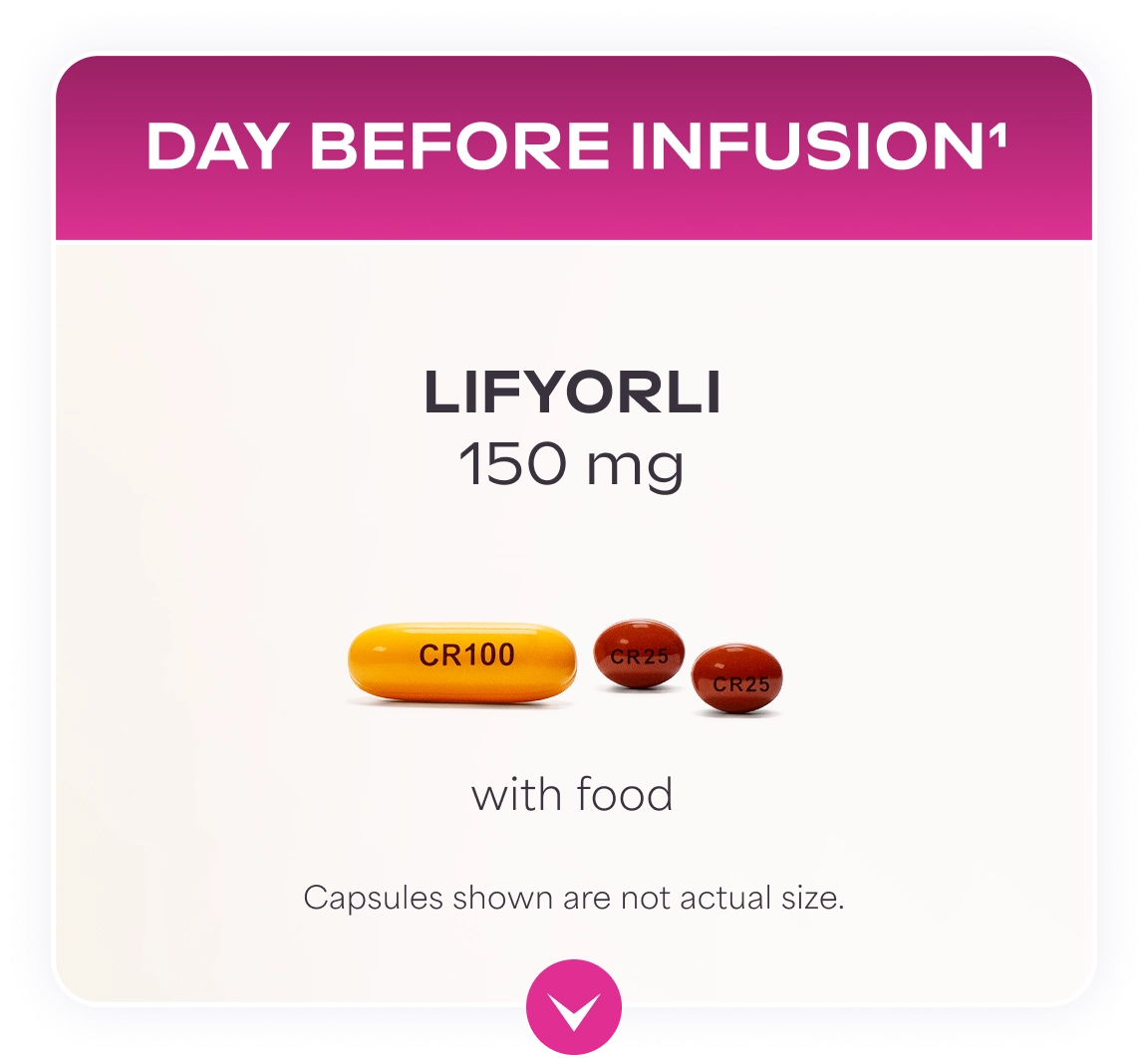
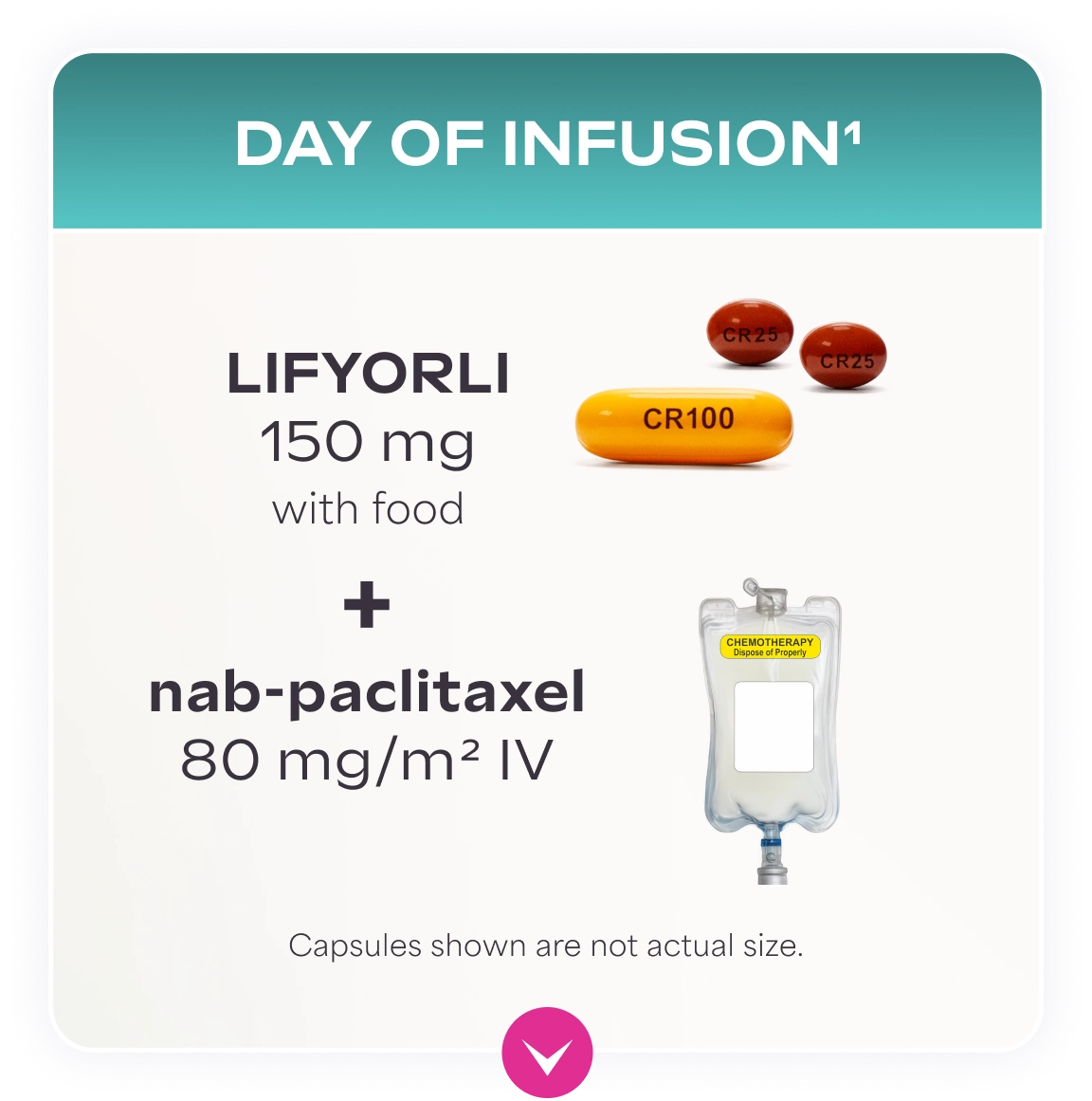
LIFYORLI plus nab‑paclitaxel treatment cycle
Nab‑paclitaxel
80 mg/m2 IV infusion over 30-40 minutes on Day 1, Day 8, and Day 15
of a 28-day cycle.1,2
When administered in combination with LIFYORLI, the recommended dose of nab‑paclitaxel is 80 mg/m2.1
The recommended nab‑paclitaxel dose in this regimen differs from dosing used in other approved nab‑paclitaxel indications.1
LIFYORLI is contraindicated in patients who are on a systemic
corticosteroid therapy for a lifesaving purpose.1
Dosing Questions
What should patients do if they miss a dose?

If a dose of LIFYORLI is missed, patients should follow these simple guidelines to stay on track with treatment:

If it has been less than 12 hours since the scheduled dose, take the missed dose as soon as it is remembered.1

If it has been 12 hours or more since the scheduled dose, skip the missed dose and take the next dose at the regularly scheduled time.1
What should patients do if nab‑paclitaxel is rescheduled?
If a nab‑paclitaxel infusion is rescheduled, do not take LIFYORLI. Instead, LIFYORLI should be taken the day before, day of, and day after the new infusion date to get back on schedule.1
LIFYORLI dosing and administration guidance
Dive deeper into dosing and administration instructions, including use in special populations, monitoring during treatment, and dose modifications.
Transcript
Welcome.
In this video, we’ll go over the basic dosing and administration instructions for LIFYORLI.
For more detailed instructions and treatment tips, please refer to the full dosing and administration guide available at LIFYORLIhcp.com.
LIFYORLI is an oral medication.
It is indicated in combination with nab‑paclitaxel for the treatment of adults with platinum-resistant epithelial ovarian, fallopian tube, or primary peritoneal cancer, who have received 1 to 3 prior systemic treatment regimens, at least one of which included bevacizumab.
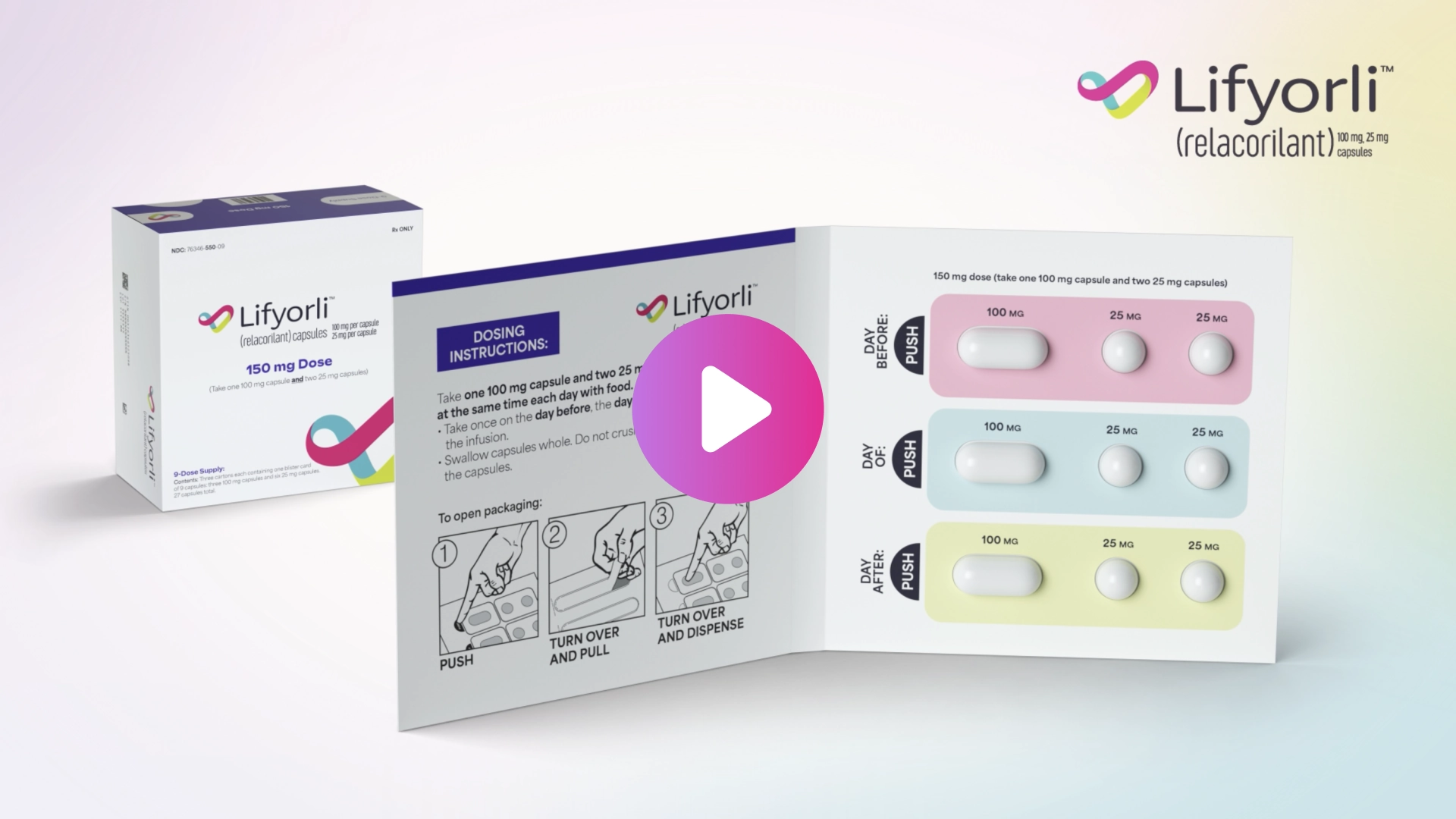
The LIFYORLI carton contains a nine-dose supply.
The back of the box contains space to note treatment dates.
When your patient opens the box, they’ll find three smaller cartons.
Each carton contains a blister card with a three-dose supply.
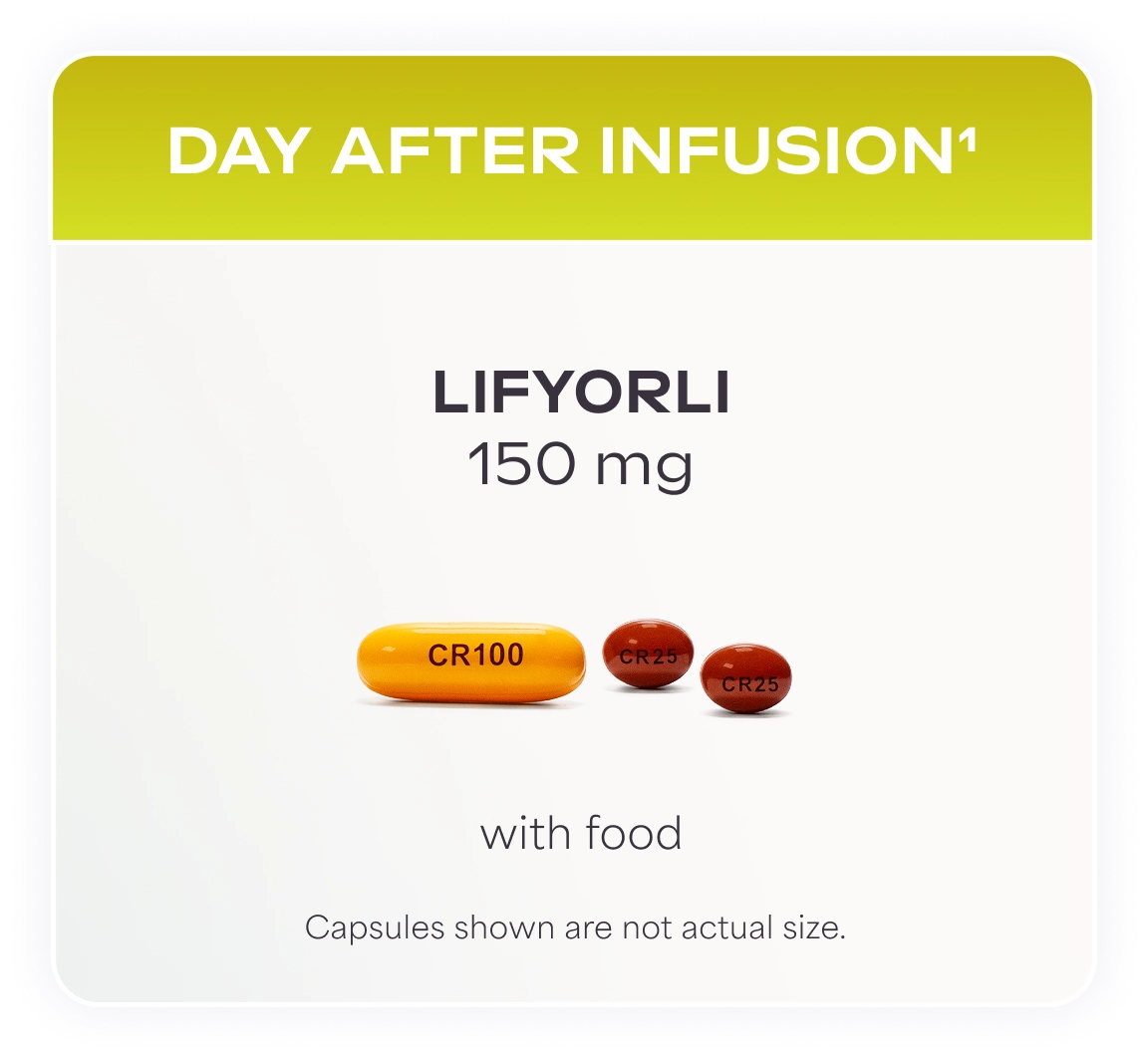
One dose of LIFYORLI consists of three soft gel capsules, one of which is 100 milligrams, and two of which are 25 milligrams each.
Your patients should take all three capsules together when it’s time for their dose.
LIFYORLI is taken the day before, the day of, and the day after your patient’s nab‑paclitaxel infusion.
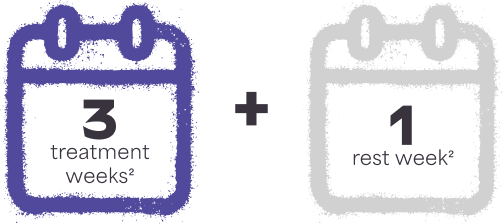
A treatment cycle for LIFYORLI plus nab‑paclitaxel is 3 treatment weeks followed by 1 rest week.
LIFYORLI should only be taken concomitantly with a nab‑paclitaxel infusion cycle.
Treatment should be continued until disease progression or unacceptable toxicity.
Patients should take LIFYORLI at home with food.
The capsules must be swallowed whole. Advise patients not to crush, chew, dissolve, or split the capsules open.
LIFYORLI should be taken the same time each day, preferably in the morning.
If your patient misses a dose of LIFYORLI and less than 12 hours have passed since the scheduled dose, they should take the dose as soon as they remember.
If it has been 12 or more hours since the scheduled dose, they should skip the missed dose and take the next dose at the regularly scheduled time.
If a nab‑paclitaxel infusion is rescheduled, your patient should not take LIFYORLI.
Instead, LIFYORLI should be taken the day before, the day of, and the day after the new infusion date.
LIFYORLI is contraindicated in patients who are on systemic corticosteroid therapy for a lifesaving purpose.
Use of LIFYORLI in patients who are taking systemic glucocorticoids for other conditions such as autoimmune disorders may exacerbate these conditions.
LIFYORLI is a glucocorticoid receptor antagonist, which may make systemic glucocorticoids less effective.
Similarly, co-administration of systemic glucocorticoids may make LIFYORLI less effective.
In the ROSELLA clinical trial, serious adverse reactions occurred in 35% of patients who received LIFYORLI in combination with nab‑paclitaxel.
Serious adverse reactions in 2% or more patients were neutropenia, pneumonia, pleural effusion, febrile neutropenia, and fatigue.
No new safety signals were observed with the addition of LIFYORLI to nab‑paclitaxel versus nab‑paclitaxel alone.
The most common adverse reactions occurring in 10% or more of patients were fatigue, edema, pyrexia, nausea, diarrhea, stomatitis, rash, nail disorders, decreased appetite, cough, dizziness, and dysgeusia.
Clinicians should monitor patients receiving LIFYORLI for signs and symptoms of adrenal insufficiency.
There were no cases of adrenal insufficiency reported in ROSELLA.
The safety of LIFYORLI plus nab‑paclitaxel is consistent with the known safety profile of nab‑paclitaxel alone.
Nab‑paclitaxel is a chemotherapy administered through IV infusion with orally administered LIFYORLI for the treatment of platinum-resistant epithelial ovarian, fallopian tube, or primary peritoneal cancer.
It is a solvent-free albumin-bound form of paclitaxel that does not require premedication with a corticosteroid.
Nab‑paclitaxel is administered at 80 milligrams per meter squared IV infusion over 30 to 40 minutes on day 1, day 8, and day 15 of a 28-day cycle.
When administered in combination with LIFYORLI, the recommended dose of nab‑paclitaxel is 80 milligrams per meter squared.
The recommended nab‑paclitaxel dose in this regimen differs from dosing used in other approved nab‑paclitaxel indications.
In all circumstances, LIFYORLI should be interrupted or discontinued when nab‑paclitaxel is interrupted or discontinued.
Please note that nab‑paclitaxel should not be replaced with paclitaxel.
Careful monitoring helps ensure safe and effective use of LIFYORLI in combination with nab‑paclitaxel.
It is important to remain alert to common adverse events, complete baseline checks, and continue ongoing assessment throughout treatment.
Before each nab‑paclitaxel infusion, it is important to confirm your patient’s lab values and vital signs and obtain their complete blood count.
Throughout treatment, watch for fatigue, pallor, fever, chills, rash, or appetite loss.
Look for sore throat or other signs of infection and monitor for neutropenia with frequent complete blood counts.
Observe neutropenia precaution measures per institutional guidelines.
Avoid LIFYORLI in combination with nab‑paclitaxel in patients with moderate or severe hepatic impairment.
LIFYORLI can cause fetal harm when administered to a pregnant woman.
A higher incidence of grade 3 or 4 adverse events and dosage modification occurred in patients aged 65 and older when compared to younger adult patients.
No overall differences in effectiveness were observed between patients aged 65 years and older and younger patients.
LIFYORLI makes systemic glucocorticoids less effective and may exacerbate conditions treated with systemic corticosteroids.
LIFYORLI is contraindicated in patients who are on a systemic corticosteroid therapy for lifesaving purposes.
If dose adjustments are required during treatment due to neutropenia, please refer to the table on screen or the dosing and administration guide and adjust accordingly.
Supportive short-acting G-CSF may be administered 24 hours after nab‑paclitaxel for 2 days in accordance with clinical practice.
If dose adjustments for nab‑paclitaxel or LIFYORLI are required during treatment due to adverse reactions, please refer to the tables on screen or the dosing and administration guide and adjust accordingly.
In all circumstances, LIFYORLI should be interrupted or discontinued when nab‑paclitaxel is interrupted or discontinued.
In the ROSELLA study, adverse reactions requiring dosage interruptions of LIFYORLI plus nab‑paclitaxel in 5% or more of patients included neutropenia, anemia, and fatigue.
Thank you for taking the time to review the dosing and administration information for LIFYORLI plus nab‑paclitaxel.
For detailed instructions including additional treatment tips, you can request a printed copy of the dosing and administration guide from a representative, or you can download a digital copy at LIFYORLIhcp.com.